

Libraries Without Borders US
It's an urgent matter. The need to read. Make a donation!
Puerto Rico
Puerto Rico’s Libraries Are Already Here. It’s Time to Connect Them
What two years of counting every library on the archipelago taught us.
Alexander Aldarondo
Puerto Rico Regional Program Director, Libraries Without Borders US
We began this work asking ourselves the question: How can we support the evolution of libraries in Puerto Rico towards spaces that transform people’s lives through innovative access to information, resources and services? However, we stopped cold when we realized we were dealing with a very unique context.
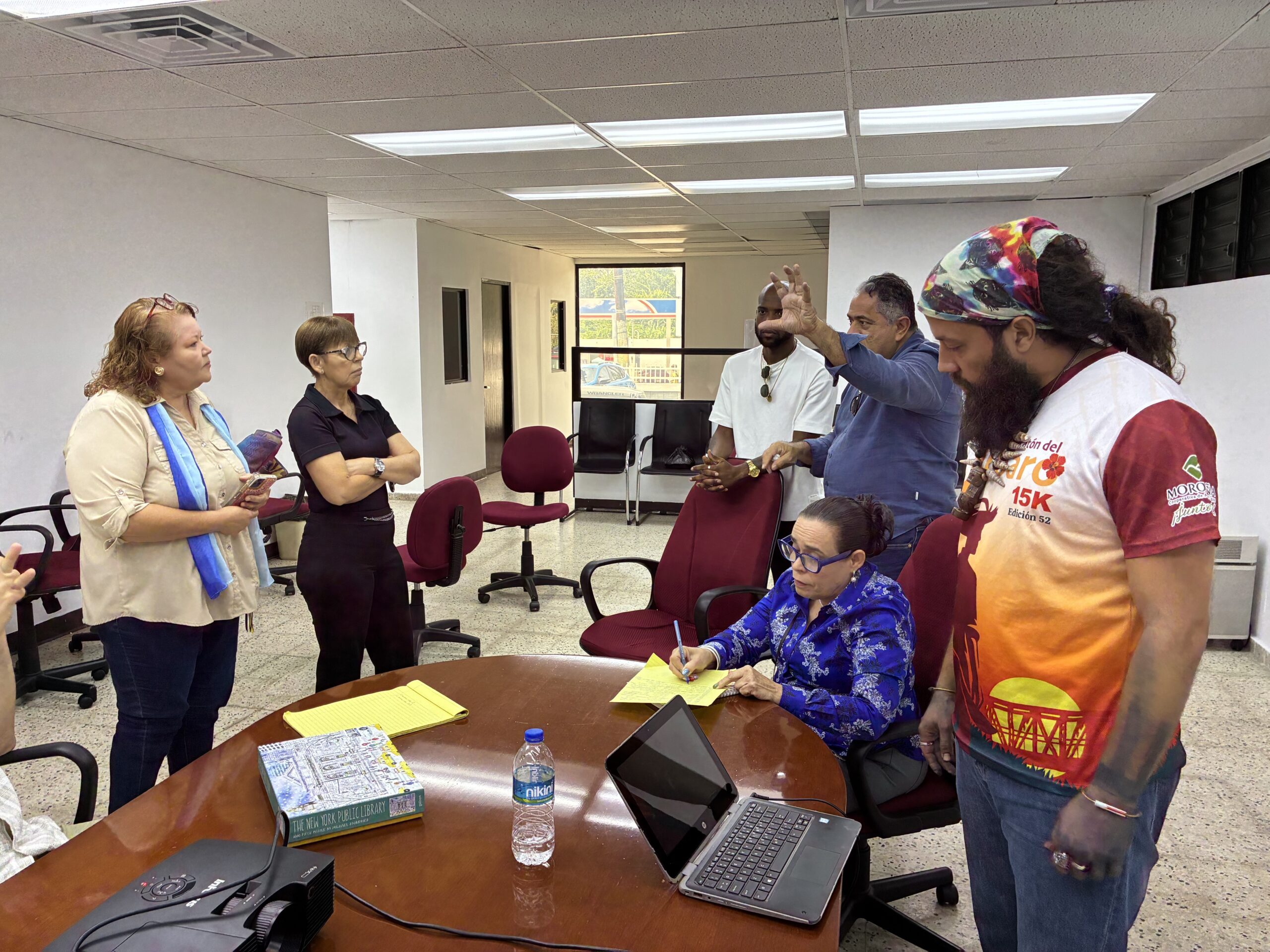
For two years, my team and I drove across Puerto Rico asking a question nobody could answer: how many libraries actually exist here, and where are they?
There was no comprehensive list. No real census, registry, or shared map. What we found were libraries operating without librarians — often just an assistant looking after the room, untrained, with no budget for books. Some had nothing but a room with a few books, old desktop computers, and open Wi-Fi. Services were scattered and thin, disconnected from each other, with no agency stepping in to change that.
So the LWB Puerto Rico team took it upon themselves to go out and count all the libraries we could possibly find: library by library, town by town, with a survey, a camera, and a lot of mileage.
The result is the Directorio Nacional de Bibliotecas de Puerto Rico, the archipelago’s first national library registry. It launched this spring with 202 documented libraries. In June, the Puerto Rico chapter of the Association of Caribbean University, Research and Institutional Libraries (ACURIL) recognized the project with the Premio Albertina Pérez de Rosa.
Receiving the award and being recognized by our own peers, local librarians and organizations honoring local work, was very meaningful for us. However, what was most important was that this hands-on research produced the first honest picture of the library landscape of Puerto Rico. And what it revealed was tough to digest and suggested there was a lot of work ahead to be done.
What the Data Revealed
The picture that emerged wasn’t pretty. It exposed a reality of extreme structural neglect:
None of this reflects a lack of will. The people running these spaces do it anyway, in an almost heroic way. What’s missing is basic operational structure: planning, budget, staffing, coordination and capacity building.
The Hidden Access Barriers
Turning a Registry to Real Infrastructure
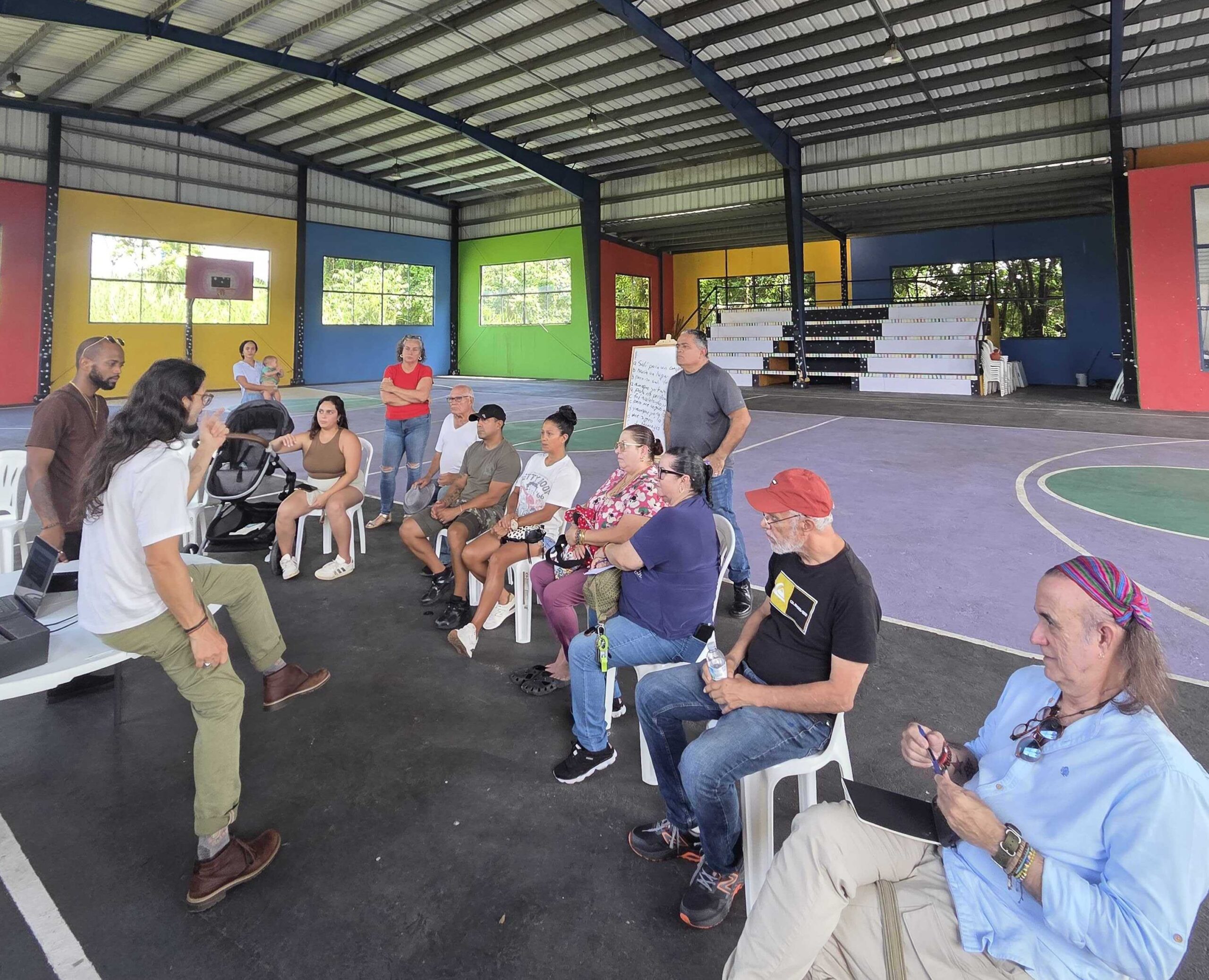
A directory that simply sits online as passive reference becomes inconsequential in light of what it revealed. We wanted it to function as shared, living, useful infrastructure, which meant it couldn’t remain ours.
We’re formally transferring stewardship of the directory to three local organizations: Sociedad de Bibliotecarios de Puerto Rico (SBPR), the Centro de Conservación y Restauración de Puerto Rico (CENCOR), and the Consorcio de Bibliotecas Metropolitanas (COBIMET), while staying closely involved, supporting the directory web platform improvements, sustaining outreach to libraries, and getting the word out about the work accomplished and ahead of us.
We’re applying the same community-ownership approach elsewhere:
Loíza: Over the past four years, local archivists have recorded over 200 oral histories and built a digital community archive documenting their local memory and cultural heritage. The local team has since established Loíza Vive, Inc., its own independent, federally recognized 501c3 public non-profit, whose chartered purpose is to document, protect, preserve, and share the collective memory and cultural treasures of Loíza’s communities.
Ciales: In a rural mountain municipality where a fire destroyed its library in August 2020, we’re partnering with the municipal government, local community organizations and the UPR School of Architecture to rebuild it as a vibrant 21st Century Community Hub Library. The Municipality of Ciales has formally committed the renovated spaces and resources resulting from this alliance to publicly accessible community use for a minimum of ten years, a commitment that extends beyond the duration of the project itself.
The Real Limit
Puerto Rico doesn’t have a library problem, it has a connection problem. What’s actually missing in Puerto Rico’s library ecosystem is coordination: baseline funding conversations, strategic planning, shared governance and problem-solving, and a public narrative that emphasizes the urgent importance of these spaces. We already have roughly 200 physical locations and a workforce that shows up anyway.
It’s a slow fix, but a real one, and it starts with something as basic as accounting for and celebrating every library that exists and every single librarian that holds space in them.
This LWB US project is generously funded by The Mellon Foundation
About the Author
Alexander Aldarondo
Alexander Aldarondo is the Puerto Rico Regional Program Director at Libraries Without Borders US, where he leads the organization’s library infrastructure, community archiving, and capacity-building work across Puerto Rico. LWB US began working in Puerto Rico in 2018, after a six-month assessment following Hurricane María’s landfall, and since then has continued to grow, building on a series of projects carried out over the years to expand library infrastructure, community-centered cultural preservation, and capacity-building work across the island.